


Nothing feels more like summer than stepping outside and enjoying the warmth of the sun. Sunlight also helps the body produce vitamin D, often called the “sunshine vitamin.” But that benefit comes with a need for caution. Too much ultraviolet exposure can damage the skin and increase the risk of skin cancer, the most common cancer in the United States.
So how can you enjoy time outdoors, support healthy vitamin D levels, and still protect your skin? The answer depends on more than simply counting minutes in the sun.
Vitamin D and Sunshine: How Much Is Enough?
Vitamin D plays an important role in bone strength, muscle function, and overall health. Your body can produce it through sunlight, but there is no single amount of sun exposure that works for everyone.
A commonly used guideline is about 5 to 30 minutes of sunlight several times a week. How much vitamin D your body actually produces depends on several factors, including:
- Your age
- Your skin tone
- The time of day and season
- Where you live
- Certain health conditions and medications
People with darker skin may require more sunlight to produce vitamin D. Older adults may also produce less because the body becomes less efficient with age. Vitamin D production can decline during winter, even here in Tennessee.
Protecting Your Skin Still Matters
Sunlight can help with vitamin D production, but too much ultraviolet exposure increases the risk of sunburn, premature aging, and skin cancer. The American Academy of Dermatology recommends using a broad-spectrum sunscreen with an SPF of 30 or higher, along with protective clothing and shade when appropriate.
You do not need to choose between protecting your skin and maintaining a healthy vitamin D level. Vitamin D can also come from foods such as salmon, tuna, egg yolks, and fortified milk, cereal, orange juice, and plant-based milks.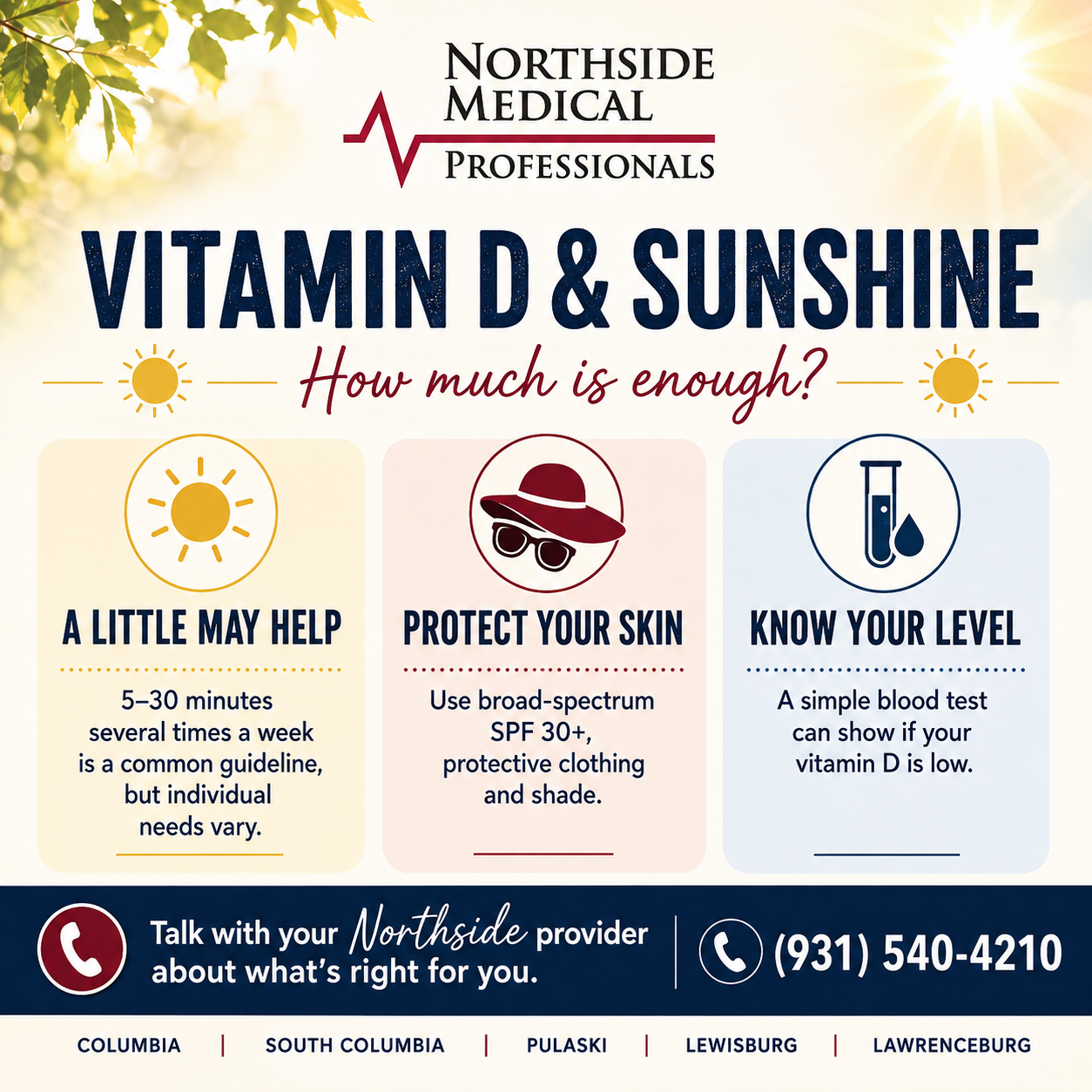
Some people may benefit from a vitamin D supplement, particularly older adults and those with limited sun exposure. However, vitamin D can build up in the body, and taking too much may be harmful. Talk with your healthcare provider before starting a supplement or changing your dose.
Wondering About Your Vitamin D Level?
A simple blood test can show whether your vitamin D level is low. Your Northside Medical Professionals provider can help you decide whether testing is appropriate and recommend the safest way to support your vitamin D needs.
A little sunshine may be helpful. Knowing what your body needs is better.